
It’s time to leave Europe.
I am conscious that every post for DailyDirects thus far has focused on European destinations. But can you really blame me? With such cultural, culinary, and linguistic diversity packed into a relatively small area, Europe has so much to offer travellers of any age and inclination. Europe is (for the most part) clean, safe, and super easy to travel around. Nevertheless, it’s high time we venture further afield. So, the honour of being the first non-European destination covered by DailyDirects goes to….Paramaribo, the capital of Suriname. Don’t know a thing about Suriname? Neither do I! Before writing this post, I doubt I’d have even been able to point out Suriname on the map or identify the country’s flag.
Situating Suriname
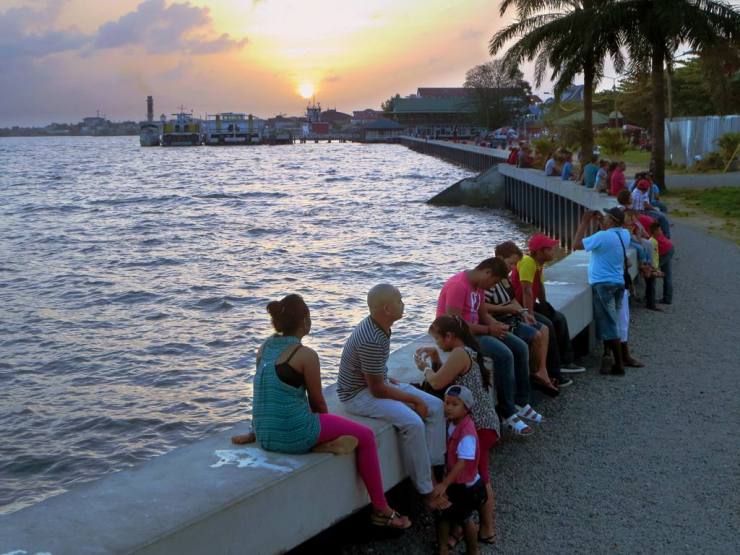
Suriname is South America’s smallest country, and is situated on the continent’s northern Atlantic coast, sandwiched between Guyana and French Guiana, with bordering Brazil to the south. It is the only country outside of Europe where Dutch is spoken by a majority of the population, having been a colony of The Netherlands until 1975, when it achieved independence. Most of country’s tiny population of 563,402 live in and around Paramaribo, which is located on the banks of the Suriname River on the northern coast.
Although Suriname is nominally a democratic country, its President, Dési Bouterse, must surely rank as one of the most controversial heads of state in the world. Bouterse formerly ruled Suriname as a military dictator in the 1980s, having taken power in a coup. He is also a convicted cocaine dealer who is wanted by Europol and has been accused of murder. To top it off, his son is currently in the US serving a prison sentence for offering Hezbollah a base in the country in exchange for $2million. Despite Bouterse’s autocratic tendencies and criminal past, Suriname itself is a relatively safe place to visit if you take the usual precautions.
What to do in Paramaribo
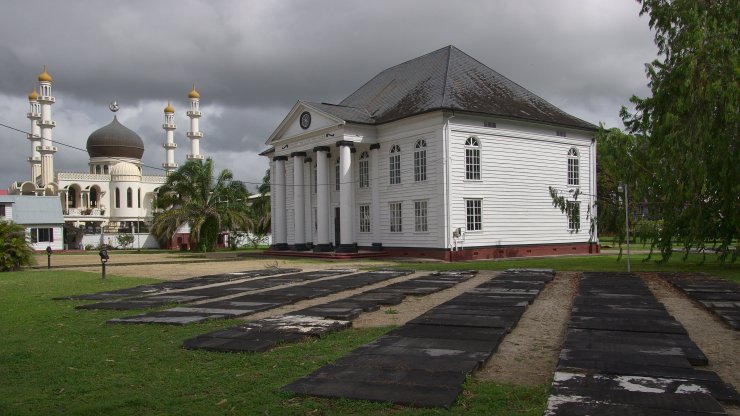
Visitors to Paramaribo will be struck by the Dutch legacy, which is apparent in the architecture found in its historic inner city, a UNESCO-listed World Heritage site. Many buildings date from the 17th and 18th centuries, and reflect the fusion of Dutch style with local materials. However, the colonial period in Suriname was harsh, as many people were brought to the country as slaves from Africa to work on plantations. After the abolition of slavery in the mid-19th century, indentured labour arrived from India, Indonesia, and China. Despite these unpleasant beginnings, the country is now recognised for having a population that is exceptionally diverse in terms of culture, ethnicity, and religion. This means that in Paramaribo you can see the rare sight of a Mosque and Synagogue sitting right next to each other, and less than a half hour walk away is a glorious Hindu Temple. Another benefit of this diversity is that Paramaribo presents travellers with a variety of culinary options, from Indian-inspired Roti to Indonesian nasi goreng.
Beyond the Capital
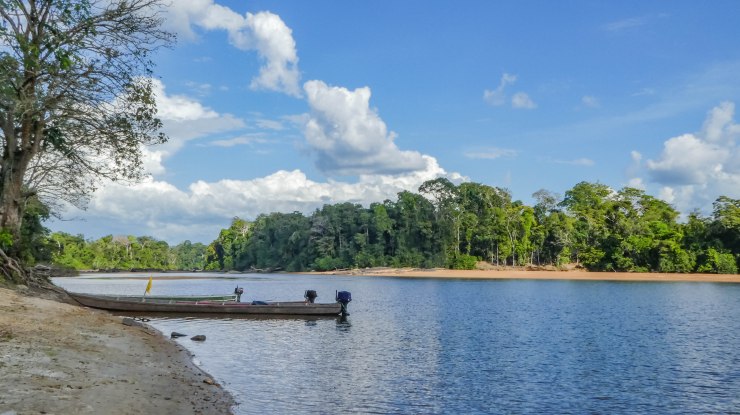
It would be slightly bonkers to come all the way to Suriname to only spend your time in Paramaribo. Arguably, Suriname’s biggest attraction is not Paramaribo but rather the vast rainforest to the south which comprises about 80% of the country’s land area. Tourism in this part of the country is becoming increasingly popular, albeit from a very low base as it remains quite expensive and difficult to get to. Those intrepid few who make the journey will be rewarded with incredibly pristine scenery, rich wildlife, and visiting remote indigenous villages. If you consider traveling to this part of the world, it is advised to go as part of an organised tour.
Direct Flights to Paramaribo
Amsterdam
You can fly direct to Paramaribo from Amsterdam with KLM or Surinam Airways.
 DailyDirects
Great post 😁
LikeLiked by 1 person